

 Canine Rehab
ilitation Services
Canine rehabilitation at Tipp City Veterinary Hospital helps dogs stay comfortable and active, whether they are getting older, living with arthritis, or recovering from an injury or surgery. Tessa Jobes, our Certified Canine Rehabilitation Practitioner, builds each dog’s plan around their condition and their age, and adjusts it as they improve.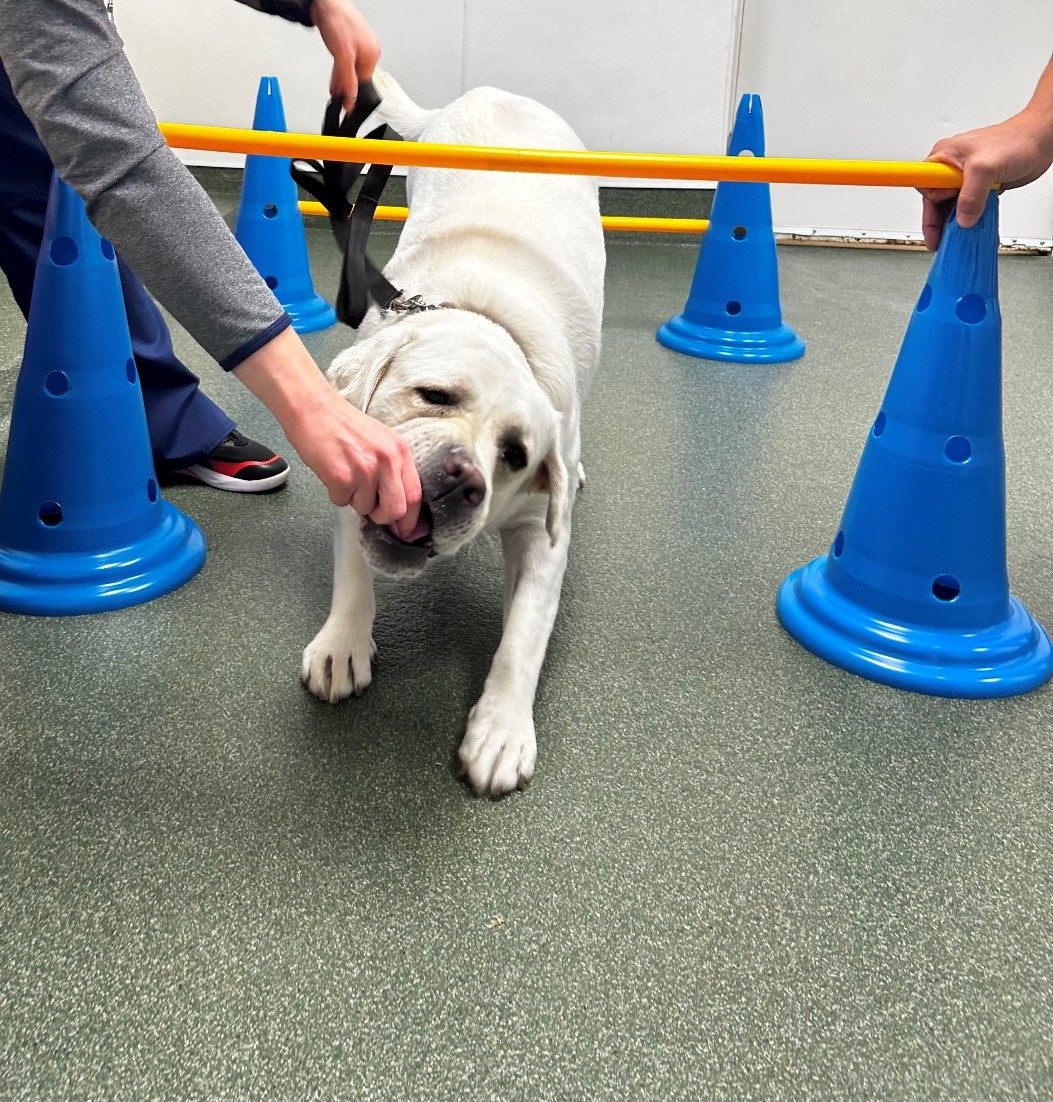

Why Choose Canine Rehabilitation?
- Faster Recovery: After an injury or an operation, therapy reduces swelling, improves circulation and rebuilds the muscle a dog lost while resting the leg. That helps your dog get back to walks and play sooner, with less discomfort along the way.
- Chronic Pain Relief: For arthritis, hip dysplasia and other degenerative joint disease, therapeutic laser and the Assisi Loop ease pain without needles or surgery. Used alongside exercise, they can make a real difference to your dog’s comfort, so medication doesn’t have to do all the work.
- Improved Function: Exercises that build strength, balance and coordination help dogs move with more confidence, whether that means getting up from the floor, managing the steps or keeping their footing on a slick kitchen floor. This matters most for older dogs who are starting to slow down.
- Preventative Care: Strong, flexible muscles protect the joints they support. Regular sessions help active dogs avoid injury and help older dogs stay active for longer, even if they have never been hurt.
 Request a Consultation
Tessa Jobes began as a Registered Veterinary Technician and went on to earn her certification as a Canine Rehabilitation Practitioner from the University of Tennessee. Her medical training and her rehab training both shape the plans she builds, whether the dog in front of her is recovering from an injury or is a senior who needs help staying on their feet.
Request a Consultation
Request a ConsultationEvery dog starts with a one-hour consultation ($125) with Tessa. She goes through your dog’s medical history, looks at how they move, checks where they are sore, and then sets out a rehabilitation plan for them.
After the consultation, you can choose the package that fits that plan:
Request a Consultation
- Core Rehab Package ($330) includes six 30-minute sessions of exercises and pain management chosen for your dog. Extra sessions after the first six are $55 each.
- Core Rehab Package + 1 Modality ($450): six 45-minute sessions that add one modality, such as therapy laser. Extra sessions after the first six are $75 each.
- Core Rehab Package + 2 Modalities ($570): six 60-minute sessions that combine two modalities, for dogs who need more intensive care. Extra sessions after the first six are $95 each.
Request a Consultation
To book a consultation, call us at 937-667-8489, email info@tippvet.com, or send a request with the button below.
Request a Consultation
Request a ConsultationLaura M.
“Last fall, Eli was diagnosed with IVDD. He was in pain, not eating well – very unhappy, and giving up. Eli is a former agility dog who has always been very active – even at 12 years old. Eli did meds and physical therapy with Tessa for 12 weeks. He loved working with Tessa and looked forward to his therapy visits. He is now back to his old self, playing fetch, and carrying his toys around. So worth the effort for the therapy as I thought early on he would not make it or be in a doggie wheelchair. LOVE TIPP CITY VET!”Brad and Keelie
“We adopted Ace after he had major surgery to remove his front leg. Tipp City Veterinary Hospital’s rehab services have been life-changing for him. Tessa, the rehab specialist, guided us through exercises that improved Ace’s strength, flexibility, and confidence. The team’s expertise and care have made a tremendous difference in Ace’s quality of life. We are so grateful for the dedication and support from TCVH and Tessa!”Frequently Asked Questions
It is the veterinary version of physical therapy. Exercise, hands-on treatment and therapies such as laser are used to ease pain, rebuild strength and help a dog move comfortably again, after an injury or surgery or with a long-term condition like arthritis.
Rehabilitation can:
- Help your dog recover sooner after surgery or an injury.
- Ease long-term pain from arthritis and other joint conditions.
- Build strength, balance and coordination.
- Make everyday movement easier, from getting up to climbing steps.
- Lower the risk of future injury by strengthening the muscles around the joints.
Depending on what your dog needs, a plan may include:
- Therapeutic exercises
- Laser therapy
- Assisi Loop therapy
- Manual therapy (massage and stretching)
- Nutritional counseling
That depends on what is being treated and how severe it is. Some dogs improve noticeably within a few sessions, while others need several weeks of steady work before the change shows.
The aim is always to reduce pain, and most of the work is gentle. Many dogs look forward to the massage and stretching. While muscles are getting stronger, a dog can feel a little sore during or after the exercises, which is expected. If your dog seems uncomfortable, Tessa changes the plan.
The first visit is the consultation. Tessa talks with you about your dog’s history, watches them walk and move, finds where they are sore, and then explains the plan she recommends.
Usually one to three sessions a week, depending on your dog’s condition and goals. Tessa will suggest a schedule and adjust it as your dog progresses.
Yes. Tessa gives you a home exercise program written for your dog, so the progress made in sessions carries on between visits.